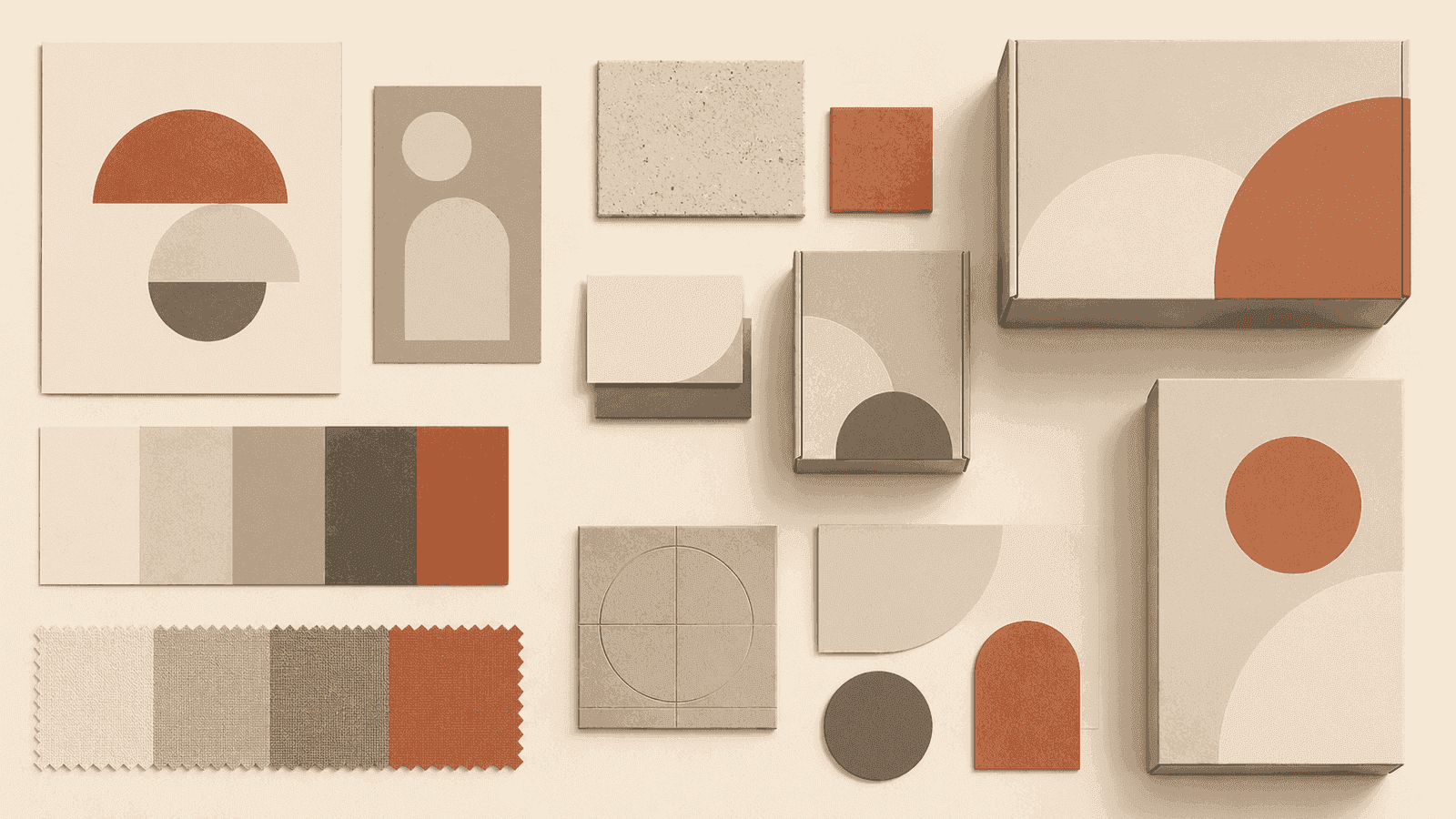
There's a version of brand identity that most e-commerce businesses settle for: a logo made in Canva, a font picked from the Shopify theme defaults, and a colour palette that was chosen because it looked nice at the time. It works well enough to get started. But it has a ceiling.
The businesses that grow past that ceiling - that build repeat customers, word-of-mouth, and a presence that survives beyond their next promotion - share something in common. Their brand is doing work underneath the surface that the logo-and-colour version never could.
What brand identity actually is
Brand identity is the system that makes your business recognisable across every touchpoint a customer has with you - the website, the product packaging, the order confirmation email, the Instagram post.
When that system is consistent, each touchpoint reinforces the others. A customer who discovers you through social media arrives on your site and immediately feels they're in the same place. The trust built on one channel transfers to the next.
When the system is inconsistent - different fonts, different tones, different visual weight - each touchpoint starts from scratch. The customer has to relearn who you are every time.
For e-commerce, consistency pays in repeat purchases
In fashion e-commerce, the customer journey rarely ends at the first purchase. The brands that build sustainable revenue have a high proportion of returning buyers - people who came back because the experience matched what the brand promised.
Brand identity is a significant part of that experience. The packaging someone receives, the email they get after the order, the look of their account page - these are all brand moments. If they're consistent with what the website promised, the customer's mental model of the brand strengthens. If they're inconsistent, it introduces doubt.
Repeat purchases are won or lost in those moments after the first sale.
The practical elements of a fashion brand identity system
For fashion and lifestyle e-commerce specifically, a complete brand identity system typically includes:
Wordmark and logo variations. A primary wordmark, a simplified version for small applications, and clear rules about when each applies. For fashion brands, the wordmark often carries more weight than a symbol.
Typography hierarchy. Which typeface handles headings, which handles body copy, what the size relationships are, and what those choices communicate about the brand's character. Editorial fashion brands typically use high-contrast serif/sans pairings.
Colour palette with usage rules. Not just the colours, but which ones are primary, which are supporting, and what combinations are permitted. A palette without usage rules will drift over time.
Photography direction. The style, mood, and composition approach that defines how product images look. This may be the most important element in fashion - and it's often not included in brand identity briefs.
Tone of voice guidance. How the brand writes about itself, what words it uses, and what it avoids. This travels from website copy through to order confirmation emails and customer service replies.
When to invest in proper brand identity work
The honest answer is: before you build the website. Brand identity defines the design system that the website expresses. Doing it the other way around means the website sets the brand's direction by default - which is backwards.
For brands launching from scratch, the identity work and the website build should happen in parallel, with the identity leading. For established brands that have outgrown their current identity, a brand refresh is best timed before a significant investment in new site or marketing infrastructure.
The cost of getting this wrong isn't the identity work itself - it's the accumulated cost of inconsistency that compounds over every campaign, every channel, and every customer interaction for years.
At Octelis, brand identity and web design are part of the same process - we don't separate them. If you're building a new e-commerce brand or refreshing an existing one, get in touch and we'll talk through what your brand currently communicates and what it should.