There's a recognisable quality to the websites of brands that feel expensive. It isn't one thing - it's a set of decisions that compound. And most of them aren't about spending more money. They're about restraint.
Here's what separates a fashion website that feels premium from one that merely says it is.
Whitespace is not empty space
The most consistent characteristic of luxury fashion websites is the amount of breathing room they give each element. Text isn't crowded. Images aren't stacked. The layout doesn't try to show everything at once.
This communicates confidence. A brand that gives its product room to exist is a brand that trusts its product. A layout that crowds and competes communicates anxiety - that the brand needs to convince you, rather than simply show you.
For e-commerce specifically, whitespace also improves conversion. When there's less competing for attention, the element that matters - the product, the call to action - gets more of it.
Typography sets the register
Font choice is one of the fastest ways to communicate brand positioning, and one of the most commonly underestimated.
High-fashion brands typically pair a serif typeface - which carries heritage and authority - with a clean sans-serif for body copy and navigation. The contrast creates visual hierarchy while reinforcing the editorial quality associated with premium fashion.
The specifics matter as much as the category. Not all serifs read the same way. A DM Serif Display communicates something different to a Playfair Display, and both communicate something different to a Georgia. These distinctions are subtle when looked at in isolation and immediately apparent when a brand is built around them.
Speed is a luxury signal
This surprises people. Slow websites feel cheap. There's a physical experience of waiting - the uncertainty about whether the page will load, the jump of content as images arrive late - that undermines the impression a luxury brand is trying to create.
A sub-two-second load time on mobile isn't just a performance metric. It's a brand signal. It says the brand is well-resourced, attentive to detail, and respectful of the customer's time. All of which are things a premium brand should be saying.
For UK fashion brands specifically, mobile performance matters disproportionately. The majority of fashion browsing in the UK happens on phones. If the mobile experience isn't as refined as the desktop, half the customer journey is already broken.
Photography direction, not just photography
Two brands can both have high-quality product photography and produce completely different results. The difference is art direction - the consistent set of choices about how products are shot, lit, styled, and contextualised.
Premium fashion brands treat photography as a brand communication exercise, not a product documentation exercise. The question isn't "does this show the item clearly?" It's "does this make the customer feel something?" Both can be true at once, but the framing changes the brief.
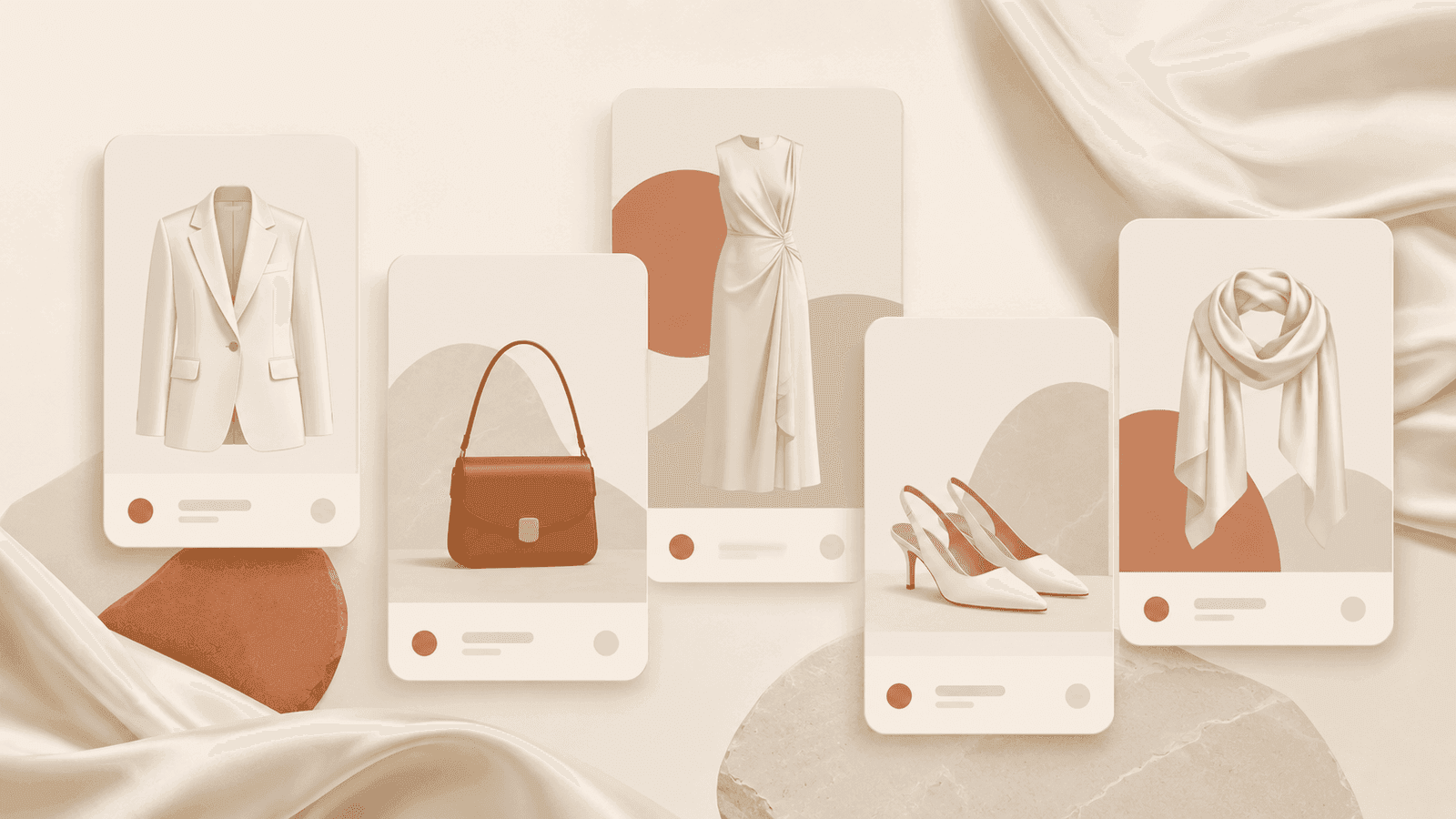
For e-commerce, this means consistent backgrounds, consistent lighting approach, consistent model styling, and consistent image proportions across the site. When the photography system is coherent, the grid pages - collections, categories, search results - look curated rather than assembled.
The checkout should not break the spell
The moment a customer moves from browsing to buying is the most vulnerable point in the luxury e-commerce experience. If the checkout suddenly looks and feels different from the rest of the site - a jarring template, an inconsistent font, a tone of voice shift - the trust built through the browsing experience can drop away quickly.
Every element of the purchase journey, from adding to cart through to the order confirmation email, should feel like it belongs to the same brand. This is a higher standard than most e-commerce builds achieve, but it's the standard that luxury requires.
What this means for UK brands building now
The gap between a fashion website that feels premium and one that doesn't is achievable. It requires specific decisions made early - about typography, photography, layout principles, and load performance - and consistency in how those decisions are applied.
It does not require the budget of a global fashion house. It requires attention to the right things from the start.
Octelis builds premium e-commerce websites for UK fashion and lifestyle brands. If you're planning a new site or rethinking an existing one, get in touch - we'll show you what's possible.