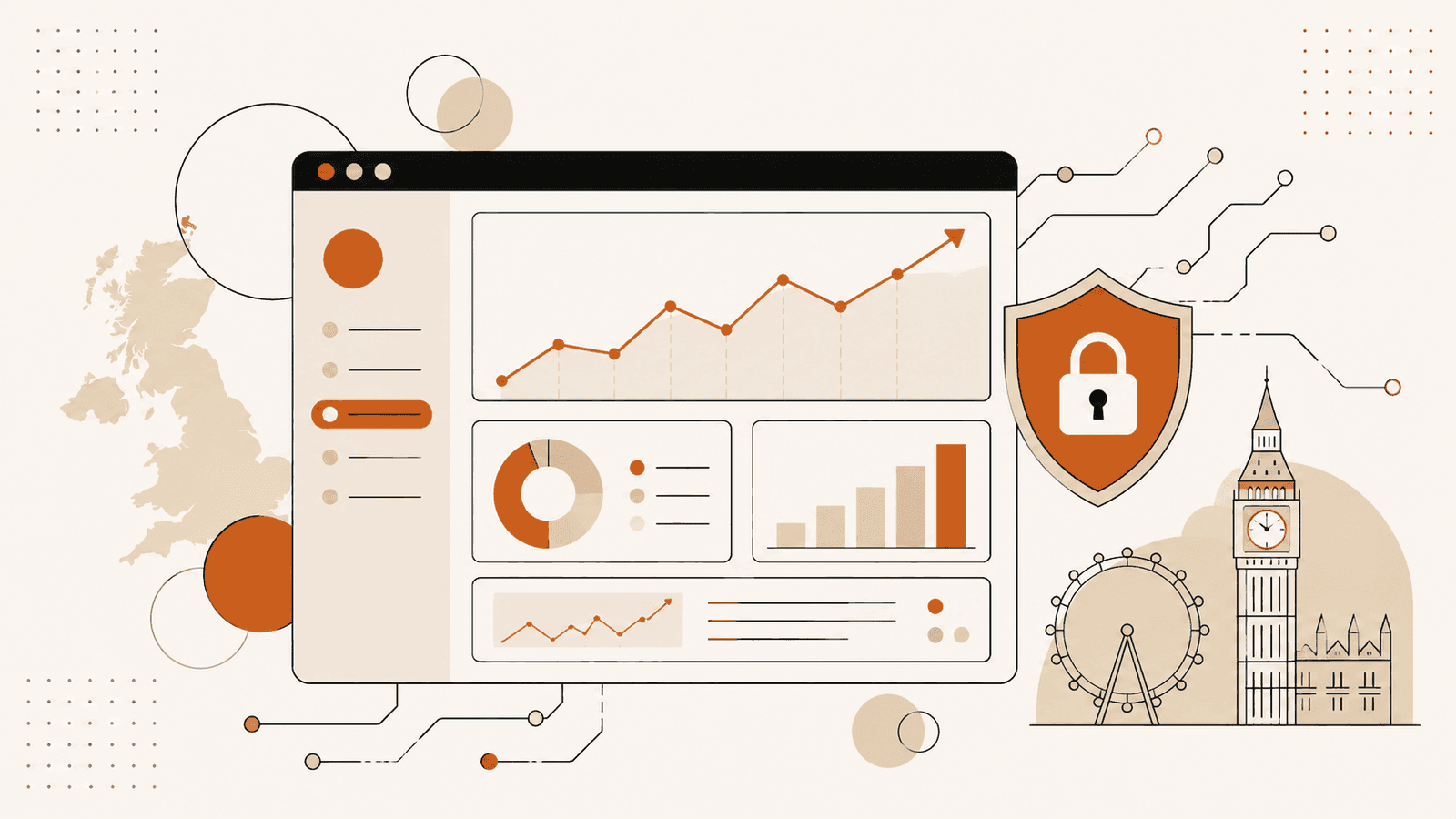
Fintech web design in the UK sits at the intersection of regulated financial services, high-stakes conversion design, and technical performance expectations that are significantly above average. A poorly built fintech website does not just underperform - it actively destroys trust in a sector where trust is the product. This guide covers what UK fintech companies need from their websites in 2026.
Fintech Web Design: What UK Financial Technology Companies Need
The UK fintech sector is one of the most competitive in the world. London is the fintech capital of Europe. Every credible player in payments, lending, wealth management, insurance technology, and banking infrastructure needs a website that projects credibility, handles compliance requirements correctly, and converts sophisticated, sceptical buyers.
Generic web design does not work here. Here's what does.
Why Fintech Web Design Is Different
Trust Is the Conversion Barrier
In most sectors, a website's job is to communicate value and prompt action. In fintech, there is an additional layer: removing distrust before value can even land.
Your visitors are deciding whether to share financial data, move money, integrate your API into their product, or recommend your platform to their board. The decision calculus includes: Is this company legitimate? Is my data safe? What happens if something goes wrong?
Every design decision must address these questions implicitly. Visual design, security signals, regulatory disclosures, team credibility, and case study depth all contribute to whether a prospect decides to engage or clicks away.
Regulatory Requirements Must Be Correct
UK fintech websites operating in regulated activities face specific requirements from the FCA:
- FCA registration number and regulatory status must be clearly visible
- Financial promotions must be fair, clear, and not misleading
- Risk warnings are required for investment and lending products
- GDPR notices and cookie consent must meet ICO standards
Getting these wrong is not just a compliance risk - it signals to informed buyers that you are not serious. A fintech that cannot manage its own website's legal disclosures does not inspire confidence in how it handles regulatory risk across its product.
Technical Standards Are Higher
Fintech customers include technical buyers - engineering teams evaluating APIs, CTOs assessing integration complexity, compliance officers checking data handling. Your website is often the first signal of your technical competence.
Slow load times, broken mobile layouts, basic security oversights, or a website that clearly runs on a template builder all send negative signals to these audiences. Technical performance is not a nice-to-have in fintech - it is part of the product impression.
What Good UK Fintech Web Design Looks Like
Clear Positioning Within 5 Seconds
UK fintech is a crowded market. Payments infrastructure, embedded finance, B2B lending, open banking APIs, insurtech, regtech - each has dozens of competitors. Your homepage must immediately communicate:
- What you do (not "we transform financial services")
- Who you do it for (specific customer type, not "businesses")
- Why you are different from the alternatives
Vague positioning language is unusually damaging in fintech because buyers are evaluating multiple similar solutions simultaneously. If they cannot quickly understand your differentiation, they move on.
Social Proof That Is Specific and Verifiable
Generic testimonials do not move fintech buyers. What works:
Named case studies with specific metrics - "Reduced payment processing time by 40% for [Client Name], a [describe their business]." The client name must be real and verifiable.
Logos from credible institutions - banks, established fintechs, regulated entities. The more recognisable the logos, the stronger the signal.
Integration partner logos - showing established fintech ecosystems (Stripe, Plaid, Visa, Mastercard) you work with signals legitimacy in the space.
Press coverage from credible financial technology publications - AltFi, Finextra, Fintech Futures - is worth featuring prominently.
Technical Documentation That Is Accessible
For B2B fintech products with an API, developer documentation, integration guides, or SDK references accessible from the main website significantly accelerate the technical evaluation process.
Hiding technical information behind sales calls creates friction for the engineering teams your business development team relies on to advance deals. The best fintech companies treat their developer documentation as a sales asset.
Security Signals
SSL certificates are table stakes and will not impress anyone. What matters:
- Explicit statements about data infrastructure (where data is stored, which cloud providers you use)
- Security certifications (ISO 27001, SOC 2, PCI DSS where relevant)
- Penetration testing attestations
- GDPR compliance documentation available for download
These need not be buried in a footer page. Surface the signals buyers care about where they will be seen.
Performance That Matches Your Brand Promise
A fintech company selling payment infrastructure or real-time financial data on a website that loads in 4 seconds has a credibility problem. Page speed is a proxy for technical competence. Aim for 90+ on Google PageSpeed Insights, both desktop and mobile.
Common UK Fintech Website Mistakes
Jargon-heavy copy that confuses rather than convinces. Your sales team knows what "embedded finance infrastructure" means. Your prospective customer's CFO may not. Calibrate language to your actual buyer, not the industry insider.
No clear primary call to action. Fintech sites frequently have three competing calls to action ("Book a demo", "Start free trial", "Talk to sales") with no visual hierarchy. Pick a primary CTA and make it dominant.
Case studies that describe what you did, not what the customer achieved. "We integrated our API with [client]'s platform" is a case study about you. "We reduced [client]'s payment reconciliation time from 3 days to 4 hours" is a case study about their business. The latter converts.
Pricing that requires a sales conversation to understand. B2B fintech buyers increasingly expect transparent pricing or at minimum a transparent pricing structure. "Contact us for pricing" creates uncertainty that often ends evaluation before it begins.
Mobile experiences built as an afterthought. Even B2B fintech buyers check websites on their phones. A desktop-designed site that barely functions on mobile signals poor product thinking.
Choosing a Web Design Agency for Your UK Fintech Company
Not every web design agency is equipped to handle fintech requirements. What to look for:
Experience with regulated sectors. Financial services, legal, healthcare - sectors with disclosure and compliance requirements. The design decisions differ from standard commercial sites.
Technical build quality. Prefer agencies that build on modern frameworks (Next.js, React) over page builders. Fintech needs performance and security that page builders cannot consistently deliver.
Understanding of B2B conversion. Fintech often involves long sales cycles, multiple stakeholders, and sophisticated buyers. An agency that primarily builds restaurant websites will not understand the conversion architecture your site requires.
Ability to handle compliance copy. Risk warnings and regulatory disclosures are part of the design, not an afterthought. An experienced agency integrates these into the layout rather than bolting them on.
Octelis and Fintech Web Design
Octelis builds websites for UK businesses where performance and trust are critical - including financial services and technology businesses. Our custom builds use modern frameworks, achieve 90+ PageSpeed scores, and are structured to rank on Google from day one.
If you are a UK fintech looking for a web design partner that understands both technical performance and trust-based conversion design, get in touch. We will give you an honest assessment of what your website needs and what it will cost.
Frequently Asked Questions
Do UK fintech startups need a custom-built website?
Not necessarily at pre-seed or seed stage. A well-configured Webflow or WordPress site can serve a fintech until product-market fit is established. At Series A and beyond, custom builds on modern frameworks become important for performance, integrations, and brand credibility with enterprise buyers.
How should UK fintech companies handle cookie consent?
Under the UK GDPR and PECR, you need explicit consent before placing non-essential cookies. A compliant cookie banner that offers genuine choice (not just "Accept" buttons) is required. Pre-ticked boxes and implied consent are not compliant. Get this right before launch - the ICO has fined businesses in regulated sectors for cookie consent failures.
What should a UK fintech pricing page include?
At minimum: clear description of what is included at each tier, transparent pricing or an honest "pricing varies by volume/complexity" with example ranges, comparison table for multi-tier products, and a clear CTA for custom or enterprise enquiries. The more transparent you can be, the faster buyers can self-qualify.
How important is page speed for a fintech that primarily sells through sales teams?
Still very important. Prospects that your sales team introduces will research your company online before and after every call. A slow, poorly designed website undermines the work your sales team does in person. Treat your website as part of the sales process, not just marketing.
Building a UK fintech website that projects credibility and converts sophisticated buyers? Talk to Octelis - we build for performance, trust, and Google rankings.
Related reading: