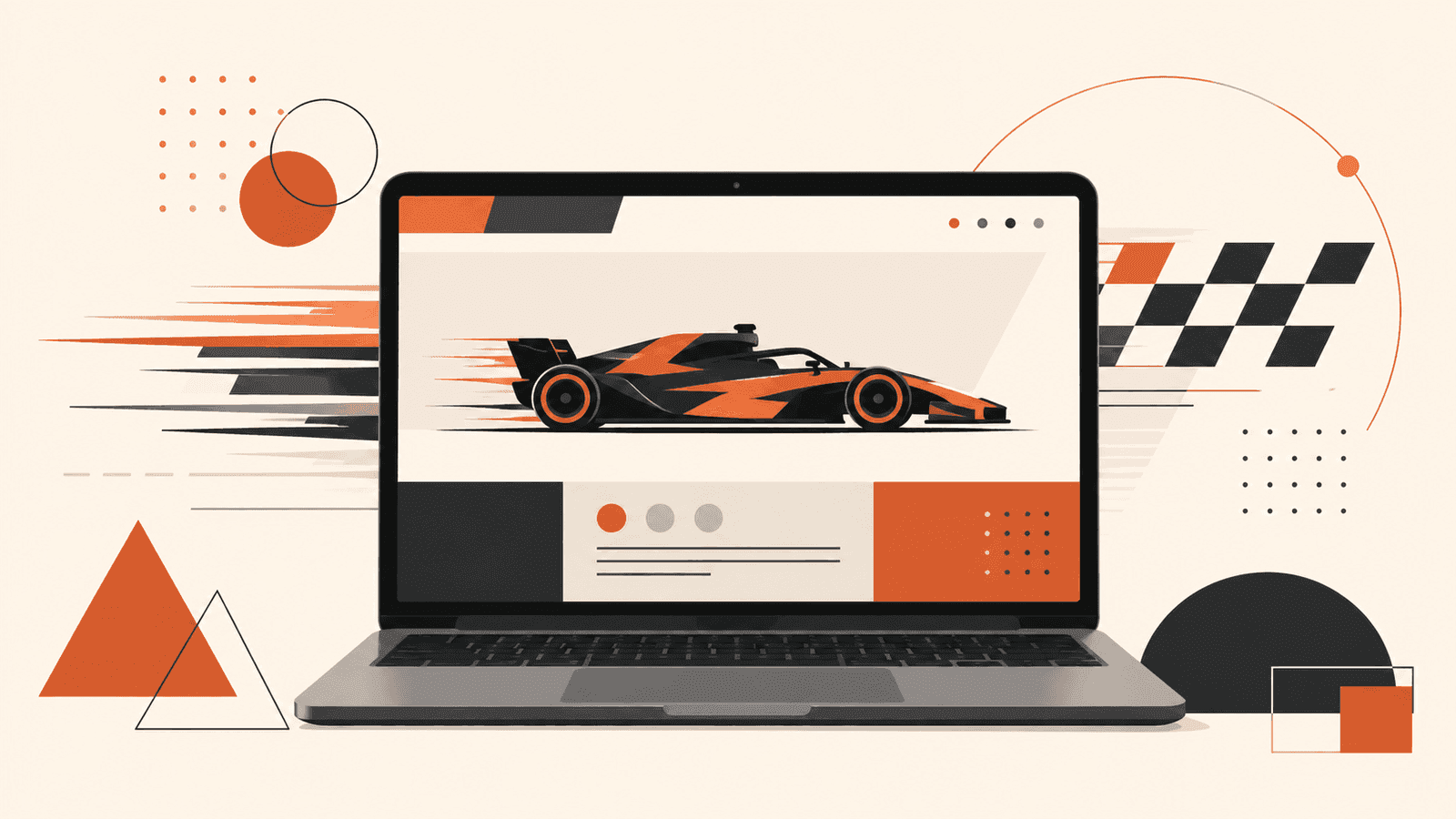
Most racing drivers have a social media presence. Far fewer have a website that works commercially. If you're a professional driver looking to grow your sponsorship portfolio and build a media profile, that gap is more expensive than it looks.
Here's what a professional racing driver website design actually needs to do - and why the difference between a good one and a poor one is often a five-figure sponsorship deal.
The website is your commercial pitch document
When a potential sponsor Googles your name - and they will - the first thing they find tells them everything they need to know about how seriously you take your career. A fragmented social presence or an outdated site built on a free template signals that you're not yet operating at the professional level they want to associate with.
A well-built personal website tells a different story. It says: this driver has their career organised. They're credible. They're worth talking to.
The design and structure of the site should reflect the same standards you hold yourself to on track.
What should a racing driver's website include?
1. A strong hero section
The first impression should be immediate and striking. High-quality action photography - ideally showing your car at speed - sets the tone before a visitor reads a single word. Your name, series, and a short positioning line ("British Formula 3 Championship driver") should be visible above the fold on every device.
2. Career highlights in a scannable format
Sponsor contacts are busy. They're not going to read three paragraphs of prose about your 2022 season. A clearly structured highlights section - championships contested, podiums, notable results, teams represented - lets them assess your CV in under 60 seconds.
3. A dedicated sponsorship page
This is the element most driver websites get wrong by omitting it entirely. A dedicated page for commercial partners should cover:
- The audience you reach (social following, fan engagement, media coverage)
- What sponsorship packages look like (title, associate, merchandise, digital)
- The value you provide beyond a logo on the car
- A clear call to action and contact form
Don't make potential sponsors ask for a media pack. Put it on the website.
4. A media gallery
Press and content teams need photography. If your images are buried in a Dropbox folder that requires an email to access, you're adding friction to a process that should be effortless. A well-organised media gallery, with high-resolution downloads available, makes your site genuinely useful to journalists and media partners.
5. Race calendar
Fans follow drivers because they want to be part of the journey. A calendar showing upcoming rounds - with circuit details and relevant session times - keeps people engaged and gives commercial partners visibility into your season schedule before they commit.
Motorsport design: getting the aesthetic right
Dark backgrounds, strong typography, and precise accent colours are the visual language of professional motorsport. Done well, they make a site feel fast and purposeful. Done poorly, they're heavy and hard to read.
The key is contrast and restraint. One accent colour, used consistently. Clean headings with generous white space. Photography that's allowed to breathe rather than crowded by UI elements.
Avoid the temptation to add too much. Speed and precision apply to design too.
Mobile matters more than you think
A large proportion of sponsorship conversations start on a phone. A potential commercial partner forwarding your link to a colleague, or a brand manager checking their messages between meetings - these are mobile moments. If your website falls apart on a small screen, you've lost the opportunity before it started.
Every element of a racing driver's website should be designed mobile-first, with touch-friendly navigation and legible text at all screen sizes.
The bottom line
Your website is the only platform you fully own. Social media can change its algorithm overnight. Your racing website, built properly and hosted on your own domain, is always there - consistent, professional, and working for you whether you're at the circuit or asleep.
At Octelis, we build personal websites for professional athletes and motorsport drivers across the UK. Talk to us about your project →