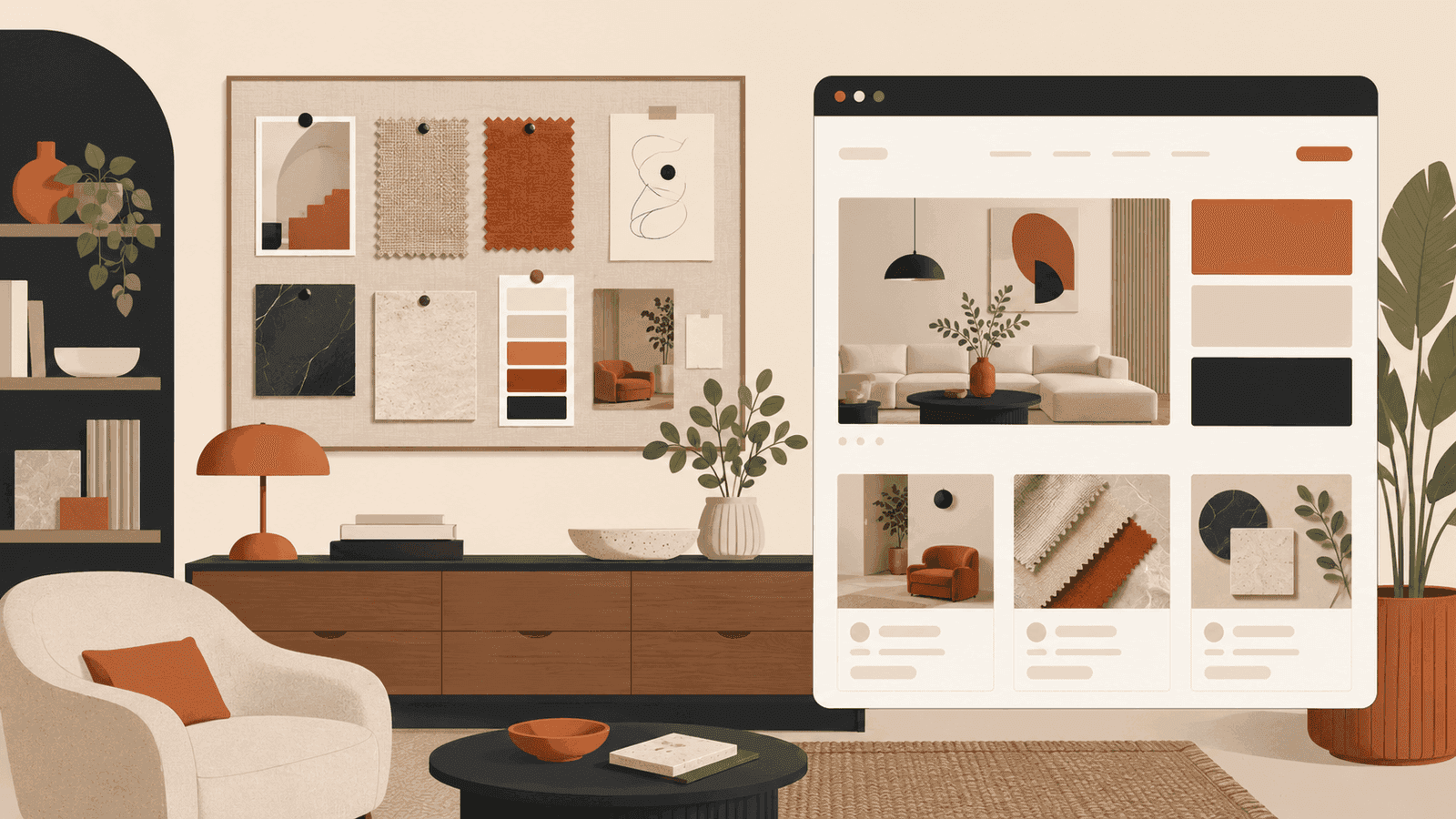
Web design for interior designers in the UK means building a website that showcases your portfolio to attract premium residential and commercial clients, ranks for location and style searches ("interior designer London", "luxury interior design Birmingham"), and converts visitors into consultation enquiries. Key pages: portfolio by room and style, services with pricing guidance, and a structured enquiry form. Cost: £80-£150/month on subscription, or £2,000-£6,000 as a one-off build.
An interior designer's website is their most important portfolio tool - and often their primary new client acquisition channel. A prospective client researching interior designers in their area will form a complete judgement of your aesthetic, taste, and professionalism from your website before ever speaking to you.
The interior design market in the UK is competitive and largely portfolio-driven. Clients do not hire interior designers based on a paragraph of credentials - they hire based on whether they love the work. Your website is where that love-at-first-sight connection either happens or does not.
What prospective interior design clients look for
Aesthetic alignment. Before reading a word, prospective clients judge whether your portfolio looks like what they want. Contemporary minimal, maximalist, heritage, Scandi, traditional, eclectic - your style should be immediately apparent from the first images they see. A portfolio that tries to show every aesthetic looks indecisive. A clear design philosophy that runs through your work attracts the clients who are the right fit.
Room types and scales. A client wanting a kitchen redesign needs to know you have designed kitchens. A developer wanting commercial refurbishments needs to know you have done that scale of project. Organising your portfolio by room type (kitchen, living room, bedroom, bathroom, office) and by project scale (single room, full house, commercial) helps prospective clients find relevant work quickly.
Before and after. Nothing communicates transformation capability like before-and-after photography. A dark, cluttered room transformed into a considered, layered space shows what the design process actually achieves - far more persuasively than beautiful photography of a room that was already beautiful before you started.
The process. Most residential design clients have never worked with an interior designer. They do not know what to expect from the initial consultation, concept phase, specification, or installation. A clear, honest explanation of how you work - with timescales, what they need to provide, and what they receive at each stage - reduces anxiety and increases enquiry rates.
Testimonials from named clients on named projects. "Complete redesign of a Victorian terrace in Edgbaston - working with [Designer] transformed every room" from Mr and Mrs J., Birmingham, is far more persuasive than a generic five-star rating. Location-specific testimonials also contain local keywords that support local search rankings.
Portfolio structure for interior design websites
Hero gallery. 8-12 of your strongest images across different projects and room types. The homepage gallery is your shop window - it should be high quality, consistent in aesthetic, and load fast despite being image-heavy.
Projects section. Individual case studies for each major project:
- Project title and location (approximate - clients' full addresses are private)
- Brief description of the brief and client's goals
- Key design decisions and reasoning
- Multiple photos of each room in the project
- Before photos if available and aesthetically appropriate
Room type galleries. Filtered views by room (kitchen, bedroom, living room, etc.) or by style (contemporary, traditional, eclectic) allow prospective clients to find relevant work without scrolling through your entire portfolio.
Services page. Individual descriptions for each service you offer:
- Full residential design (concept through to installation)
- Room-by-room design
- Commercial interior design
- E-design / online design consultations
- Design consultations and advice
- Colour consultations
Each service should explain what it involves, what the client receives, and indicative pricing or a pricing range.
Process page. Walk clients through your typical project journey: initial consultation, design proposal, specification, supplier coordination, installation, and photography. Many residential clients find the process daunting before they start - a clear explanation builds confidence and increases enquiry rates.
Photography: the foundation of an interior design website
Professional photography is not optional for an interior design website. It is the product. Poor photography of even excellent interiors fails to convert prospective clients. Excellent photography of modest interiors consistently converts better than poor photography of luxury rooms.
What good interior photography includes:
- Wide shots of complete rooms in natural light
- Detail shots of specific decisions (joinery, textiles, lighting, accessories)
- Before-and-after pairs for renovation and redesign projects
- Portrait of the designer in context (optional but builds personal connection)
Technical requirements for website use:
- Images compressed for web (WebP or optimised JPEG) without visible quality loss
- Multiple resolutions served based on the visitor's screen size
- Lazy loading so the page is usable before all images have loaded
An interior design website with 200 uncompressed images scores 15-25/100 on PageSpeed. The same website with properly optimised images scores 85-95/100. The difference in search rankings and bounce rate is significant.
Style and aesthetic in website design
The design of your website is a portfolio piece in its own right. Prospective clients infer your design intelligence from how you present yourself as well as from your project photography.
An interior designer's website should:
- Reflect your own aesthetic choices (colours, typography, layout, white space)
- Be consistent in visual language with your portfolio work
- Load fast despite being image-heavy (performance and elegance are not in conflict)
- Present your work without competing visual clutter
A Squarespace template that 5,000 other designers use does not communicate design originality. A custom website built to your brief shows that you make considered aesthetic choices - which is exactly what your clients are hiring you to do for them.
Local SEO for interior designers
Location-specific service pages. "Interior designer Birmingham", "interior designer Solihull", "kitchen designer West Midlands" - combining your discipline with location targets the searches residential clients use to find local practitioners. For designers who travel nationally, location pages for each major city you serve generate local search traffic in those markets.
Google Business Profile. Complete your profile with accurate address or service area, phone, website, services listed (residential interior design, kitchen design, office design), and portfolio photos. Respond to every review.
Project case study SEO. Each project post you publish naturally contains location keywords (neighbourhood, city, property type). A post titled "Complete Victorian terrace redesign in Harborne, Birmingham" with full photography ranks for a range of location and style searches without any explicit keyword targeting.
Houzz and other design directories. Houzz is the largest interior design directory in the UK and has significant domain authority. A well-maintained Houzz profile with project photos generates referral traffic and provides a strong citation link. House Beautiful, ELLE Decoration, and Architectural Digest UK are editorial backlinks worth pursuing for designers at the premium end.
How we build websites for UK interior designers
At Octelis, we build websites for UK interior designers and interior architects that showcase portfolios beautifully, load fast despite large image files, and rank in local and style-based searches.
Our process:
- Discovery - understand your aesthetic, project types, service area, and target clients
- Keyword research - identify location and style searches your prospective clients use
- Build - custom website designed to your aesthetic with portfolio case studies, fast image loading, and local SEO
- Launch and rank - search visibility from day one, with monthly project updates included
Subscription from £80/month, no setup fee, first design draft within 48 hours.
Frequently asked questions
How many projects do I need before building a website?
5-8 well-documented projects with professional photography are sufficient to build a website that converts. Quality is more important than quantity - 6 beautiful, well-photographed projects convert better than 20 mediocre ones. Your website grows as your portfolio grows.
Should an interior designer use Houzz instead of a website?
Both. Houzz is a valuable referral channel with its own audience. Your own website builds your domain authority over time, ranks in Google independently, and gives you complete control over how your work appears. Houzz gives you a page on their domain; your website gives you a permanent asset that compounds.
How do I attract higher-value interior design clients through my website?
By showing work at the price point you want to attract. If your portfolio shows predominantly budget refurbishments, that is the work you will be enquired about. Investing in professional photography of your best projects and positioning those prominently attracts clients at that level.
Ready to win more interior design clients from Google? Talk to Octelis - we build websites for UK interior designers that present work beautifully and rank in local search.
Related reading:
- Web Design for Architects UK - the same portfolio approach for architectural practices
- Web Design for Wedding Photographers UK - image-heavy portfolio sites for visual professionals
- Squarespace vs Custom Web Design UK - why designers outgrow template platforms