A full-stack EdTech SaaS platform ranking for GCSE and A-level searches
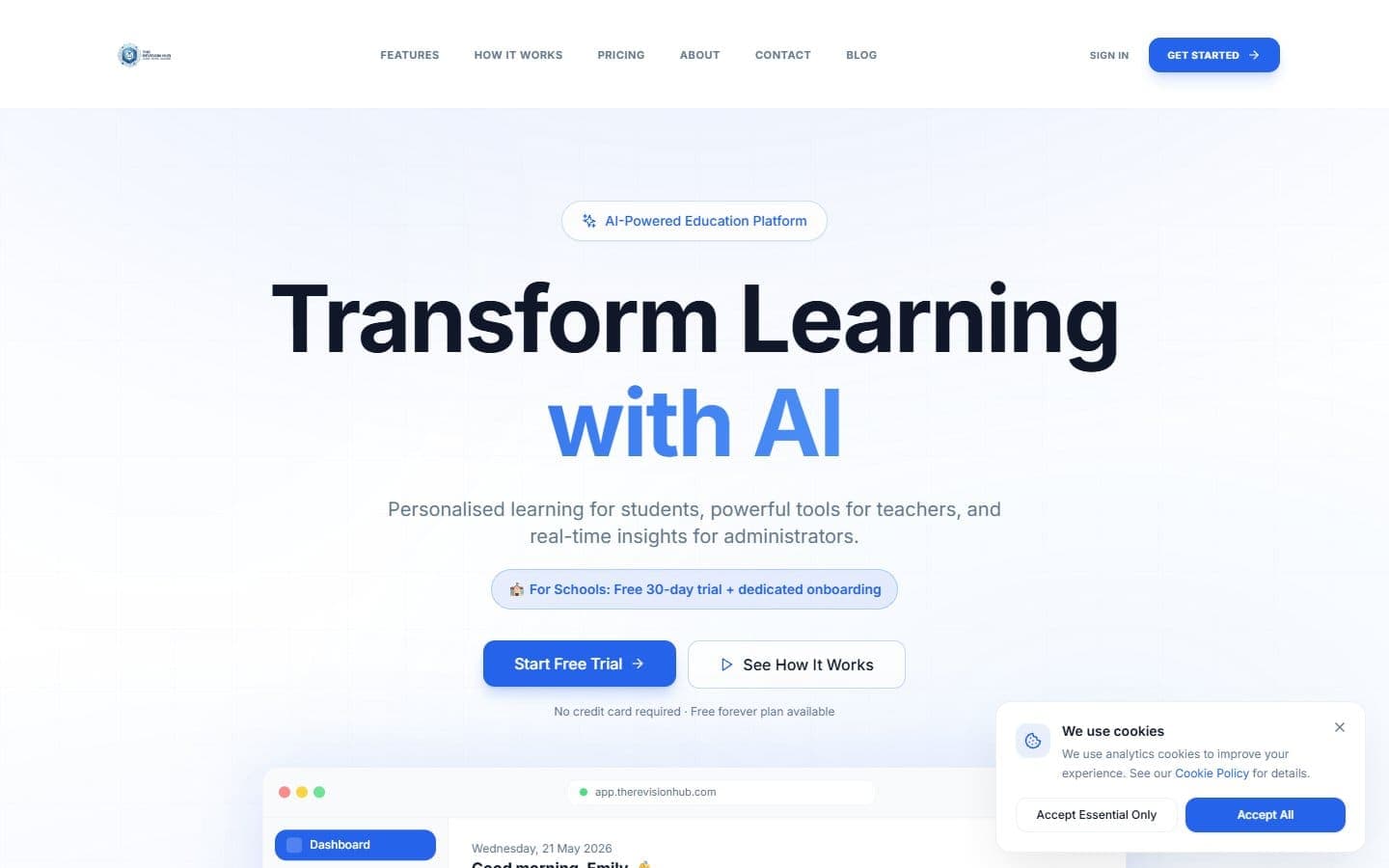
How Octelis designed and built The Revision Hub's AI-powered learning platform, then structured it to rank organically for GCSE and A-level revision searches - 231 clicks and 8.91K impressions a month, from students actually looking for help.
- 231
- Organic clicks (28 days)
- 8.91K
- Impressions (28 days)
- 2.6%
- Avg. CTR
- 24.3
- Avg. position
Straight from Google Search Console - 28 days
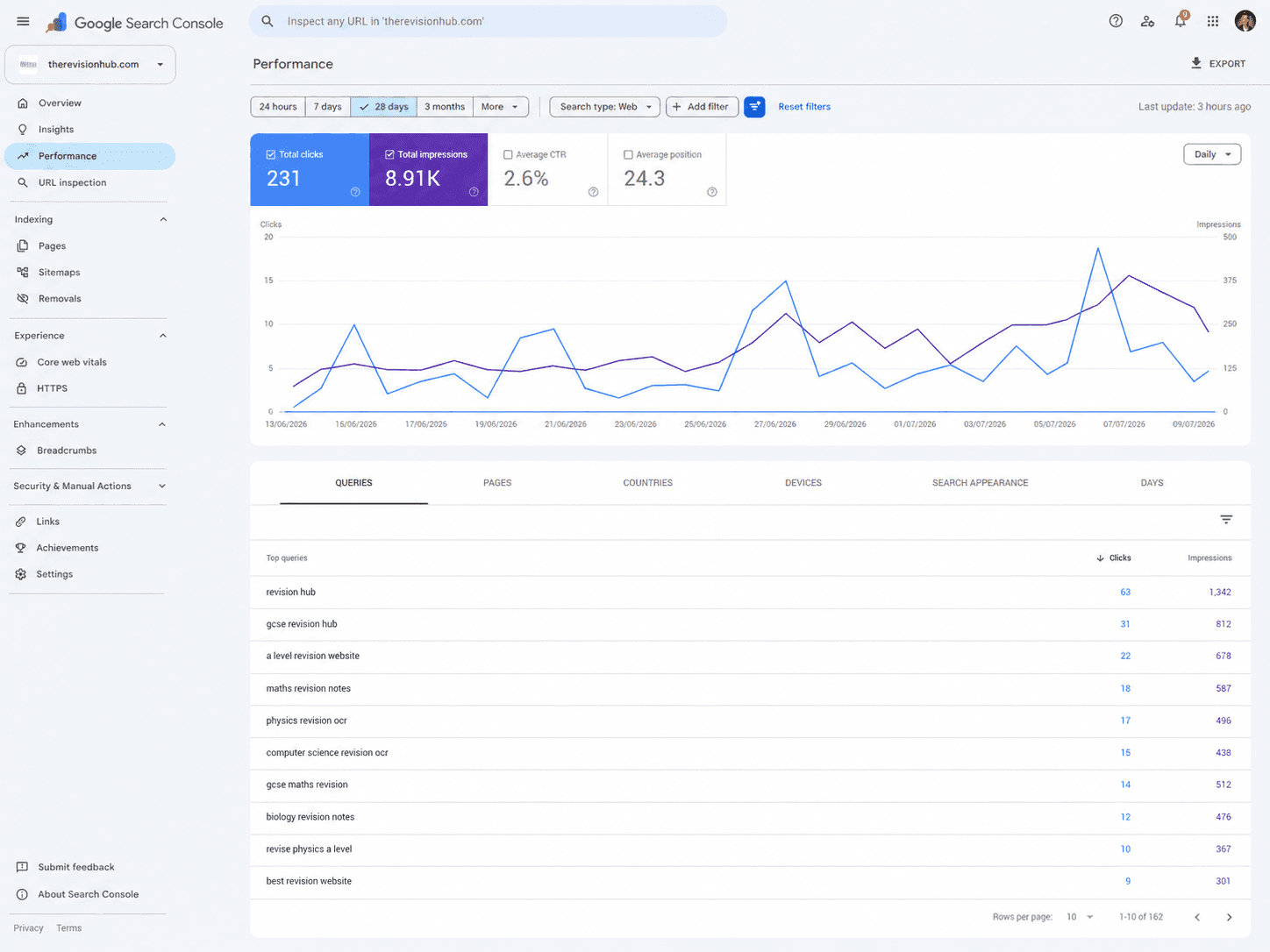
Led by "revision hub" (63 clicks), "gcse revision hub" (31 clicks, 812 impressions), "a level revision website" (22 clicks, 678 impressions), plus subject terms like "maths revision notes" and "physics revision ocr" - the exact phrase a student types the night before an exam.
A product that worked, and a website that didn't convert
The Revision Hub came to Octelis with a product already built and a problem: nobody was converting. The AI revision engine genuinely helped students retain information faster, but the website looked like an MVP demo, onboarding confused new users within two minutes, and the brand gave schools no reason to trust a young EdTech company with their students' data.
The brief had three layers: a marketing site credible to school procurement teams, a platform UI teachers could navigate without training, and a brand that felt modern and calm - not childish, not corporate.
Built for procurement teams, not just students
We rebuilt the marketing site with clean blue-and-white SaaS design, separated the student, teacher, and administrator value propositions at the navigation level, and put a school trust quote above the fold - procurement teams make decisions on evidence, not promises.
- Student, teacher, and admin journeys separated at the navigation level
- School trust signals placed above the fold for procurement teams
- Platform UI redesigned so teachers need zero training to navigate it
- A calm, modern brand - not childish, not corporate
Finding students before the exam, not after
A credible marketing site means nothing if students never find it while searching for help before an exam. Alongside the redesign, we built the content and page structure around real revision search intent - subject-specific landing pages, exam board terminology, and a blog built for topical authority.
That's organic pipeline a school procurement team can verify in Search Console themselves, not just a promise in a pitch deck.
Want 231 organic clicks a month of your own?
We design and build SaaS platforms that convert, and structure them to rank for the searches your real users are already typing.